Home Office Deduction 2026: Who Qualifies and How to Calculate It
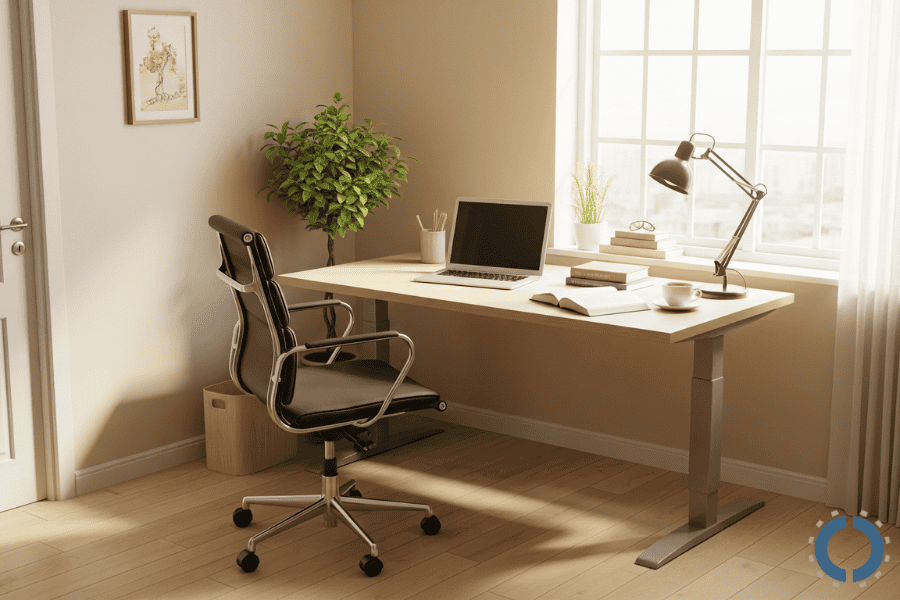
The home office deduction allows eligible taxpayers to deduct a portion of home-related expenses attributable to a dedicated workspace. For the 2026 filing season covering the 2025 tax year, this deduction remains available to self-employed individuals and small business owners, but it is not available to employees who worked from home, even if their employer required it. Understanding who qualifies and how to calculate the deduction correctly can result in meaningful tax savings.[1][2]
Who Qualifies for the Home Office Deduction?
To claim the home office deduction, you must meet two primary requirements:[1][2]
Regular and exclusive use: The space must be used regularly and exclusively for business. A spare bedroom that doubles as a guest room or a dining table used for both business and meals does not qualify. The space must be devoted entirely to business activities
Principal place of business: The home office must be your principal place of business, a place where you regularly meet clients or customers, or a separate structure not attached to your home that is used exclusively for business
Importantly, employees who work from home, even full-time remote workers, cannot claim the home office deduction on their federal return under current law. The deduction was eliminated for employees by the Tax Cuts and Jobs Act of 2018 and has not been reinstated.[3]
What Counts as a Home Office Space?
The home office does not need to be a separate room. A clearly defined portion of a room used exclusively for business can qualify, as long as the exclusive use requirement is met. You would measure the square footage of the dedicated business space as a percentage of the total square footage of your home.[1]
The Simplified Method
The IRS offers a simplified method that avoids detailed calculations and recordkeeping. Under this method, you deduct $5 per square foot of qualifying home office space, up to a maximum of 300 square feet, for a maximum deduction of $1,500.[1][2]
The simplified method is straightforward and requires minimal documentation, but it may produce a lower deduction than the regular method for taxpayers with high home-related expenses or large dedicated workspaces.[2]
The Regular Method
Under the regular method, you calculate the percentage of your home used for business and apply that percentage to actual home expenses. The business-use percentage is determined by dividing the square footage of the home office by the total square footage of the home.[1][3]
Expenses that can be allocated using this percentage include:[1][2]
Mortgage interest or rent
Real estate taxes
Utilities including electricity, gas, and water
Homeowner's or renter's insurance
Home maintenance and repairs attributable to the whole home
Direct expenses that benefit only the home office area, such as painting the office or installing shelving, are 100 percent deductible regardless of the business-use percentage.[3]
Calculating the Deduction: An Example
If your home is 2,000 square feet and your dedicated office space is 200 square feet, your business-use percentage is 10 percent. If your total annual home expenses (including rent, utilities, and insurance) were $30,000, your home office deduction would be $3,000 (10 percent of $30,000) plus any direct office expenses.[1]
Under the simplified method, a 200-square-foot office would produce a deduction of $1,000 ($5 multiplied by 200). In this case, the regular method produces a larger deduction.[2]
Deduction Limitations
The home office deduction cannot exceed your net business income for the year. If your home office expenses would create a business loss, the excess can be carried forward to a future year. Under the simplified method, the unused portion is not carried forward.[1][2]
Renters and Apartment Dwellers
The home office deduction is not limited to homeowners. Renters who use a portion of their apartment exclusively for self-employment business can claim the deduction based on their rent, utilities, and other eligible expenses using the same percentage calculation.[3]
Record-Keeping Requirements
To support a home office deduction, maintain:[1][2]
Floor plan or diagram showing the dimensions of the home office space and the total home
Receipts and records for all home-related expenses claimed
Documentation showing the regular and exclusive business use of the space
Tax software or Form 8829 calculations for the regular method
Conclusion
The home office deduction is one of the most valuable deductions available to self-employed taxpayers, but it requires strict adherence to the exclusive use requirement. Running both the simplified and regular calculations before filing ensures you claim the larger allowable deduction. If your home expenses were significant in 2025, the difference between the two methods can be substantial.[1][2][3]
Sources
[1] IRS Publication 587, Business Use of Your Home, IRS.gov
[2] IRS, Home Office Deduction, IRS.gov/businesses/small-businesses-self-employed/home-office-deduction
[3] IRS Form 8829 Instructions, Expenses for Business Use of Your Home, IRS.gov