Retirement Planning in Your 30s
Your 30s are the decade where retirement is won or lost. The decisions you make now — contribution rate, account type, asset allocation — have more impact than anything you'll do in your 50s or 60s. Here's exactly what to do, in order.
Why Your 30s Are the Most Important Decade
If you're in your 30s, you likely have 25–35 years before retirement. That timeframe is a massive advantage — and the math proves it. A dollar invested at 32 is worth roughly $7.60 at age 65 (assuming 7% annual returns). That same dollar invested at 45 is worth only $3.87. Every year of delay cuts your compounding power significantly.
Your 30s are also when competing financial priorities hit hardest: student loan debt, mortgage, childcare, car payments. The goal of this guide is to show you how to prioritize retirement without sacrificing everything else.
Retirement Savings Benchmarks for Your 30s
Fidelity's salary-multiple benchmarks are the most widely used rule of thumb. They assume you start saving at 25 and invest in a diversified portfolio targeting 7% annual return. Here's where you should be:
| Age | Fidelity Benchmark | If You Earn $60K | If You Earn $90K | If You Earn $120K |
|---|---|---|---|---|
| 30 | 1× salary | $60,000 | $90,000 | $120,000 |
| 32 | 1.25× salary | $75,000 | $112,500 | $150,000 |
| 35 | 2× salary | $120,000 | $180,000 | $240,000 |
| 38 | 2.5× salary | $150,000 | $225,000 | $300,000 |
| 40 | 3× salary | $180,000 | $270,000 | $360,000 |
The average 401(k) balance for Americans in their early 30s is around $35,000 (Vanguard 2025 data) — well below the Fidelity benchmark for most income levels. If you're starting from zero in your mid-30s, you'll need to save more aggressively (17–20%) to catch up.
2026 Contribution Limits You Need to Know
These are the maximum amounts you can contribute to tax-advantaged accounts in 2026. In your 30s, your goal should be to hit as many of these as you can, in order of priority.
| Account | 2026 Limit | Tax Benefit | Priority |
|---|---|---|---|
| 401(k) / 403(b) | $23,500 | Pre-tax or Roth | High (after match) |
| IRA (Roth or Traditional) | $7,000 | Tax-free growth (Roth) | High |
| HSA (individual) | $4,300 | Triple tax-free | Very High if eligible |
| HSA (family) | $8,550 | Triple tax-free | Very High if eligible |
| 401(k) total (incl. employer) | $70,000 | Pre-tax or Roth | After above |
Most people in their 30s should prioritize in this exact order: (1) 401(k) up to full employer match → (2) HSA if you have an HDHP → (3) Roth IRA → (4) max 401(k) to $23,500 → (5) taxable brokerage.
Roth vs. Traditional in Your 30s
This is the most consequential account decision most people in their 30s face. Here's the framework:
You're in the 10%–22% bracket
Pay taxes now at today's lower rate. Your withdrawals in retirement will be completely tax-free, including all the decades of growth.
You're in the 32%+ bracket
The deduction now is worth more than the future tax savings. A dollar saved from 32% tax beats paying Roth taxes at lower future rates.
Use both (tax diversification)
Split contributions between Traditional and Roth. This gives you flexibility to optimize withdrawals across multiple tax brackets in retirement.
Roth IRA phase-out: $150K–$165K single / $236K–$246K MFJ
Above these limits, use a Backdoor Roth IRA conversion or prioritize Roth 401(k) instead — no income limits apply there.
How to Invest Your Retirement Accounts in Your 30s
With 25–35 years until retirement, you can and should take on more risk than people in their 50s or 60s. Time is your risk mitigation. A market downturn in your 30s has decades to recover.
Asset Allocation in Your 30s
A classic starting point: 90% stocks / 10% bonds or even 100% stocks if you have high risk tolerance. The key principle: your bond allocation should roughly equal your age, so at 35 you'd hold about 35% bonds — though many modern advisors suggest being even more aggressive given longer life expectancies.
| Age | Aggressive | Moderate | Conservative |
|---|---|---|---|
| 30 | 95% stocks / 5% bonds | 85% stocks / 15% bonds | 70% stocks / 30% bonds |
| 35 | 90% stocks / 10% bonds | 80% stocks / 20% bonds | 65% stocks / 35% bonds |
| 39 | 85% stocks / 15% bonds | 75% stocks / 25% bonds | 60% stocks / 40% bonds |
What to Actually Buy
Keep it simple. For most people in their 30s, a 3-fund portfolio covers everything:
- Total US Stock Market Index Fund — broad US exposure (e.g., VTSAX, FSKAX, SWTSX)
- Total International Stock Market Index Fund — global diversification (e.g., VTIAX, FZILX)
- Total Bond Market Index Fund — stability ballast (e.g., VBTLX, FXNAX)
If your 401(k) doesn't have index funds with low expense ratios, a Target Date Fund (e.g., "Target 2055 Fund") is the best single-fund option — it automatically rebalances as you age.
Competing Financial Priorities in Your 30s
Retirement isn't your only financial obligation in your 30s. Here's how to think through the tradeoffs:
Federal loans under 6%? Invest first.
Expected market returns (7%) beat low-rate debt. If interest is above 7–8%, pay aggressively before maxing retirement accounts.
3–6 months of expenses before investing heavily
Without an emergency fund, a job loss forces you to raid retirement accounts with taxes and penalties. Build this first.
Almost always: invest in retirement over extra mortgage payments
Mortgage interest is deductible and rates are typically 4–7%. Expected investment returns beat that after tax in most scenarios.
Retirement first, then 529
You can borrow for college. You cannot borrow for retirement. Secure your own financial oxygen mask before funding a 529.
Your 30s Retirement Checklist
- ✅ Contribute at least enough to 401(k) to get the full employer match
- ✅ Open and fund a Roth IRA (if income-eligible) — $7,000/year
- ✅ Open an HSA if enrolled in a high-deductible health plan — invest it, don't spend it
- ✅ Set up auto-escalation on your 401(k) — increase 1% per year until you hit 15%
- ✅ Consolidate any old 401(k)s from previous employers into an IRA or new 401(k)
- ✅ Choose low-cost index funds — target expense ratios under 0.10%
- ✅ Increase allocation to stocks if you're holding too many bonds for your age
- ✅ Designate beneficiaries on all retirement accounts
- ✅ Create or update a basic will and life insurance coverage if you have dependents
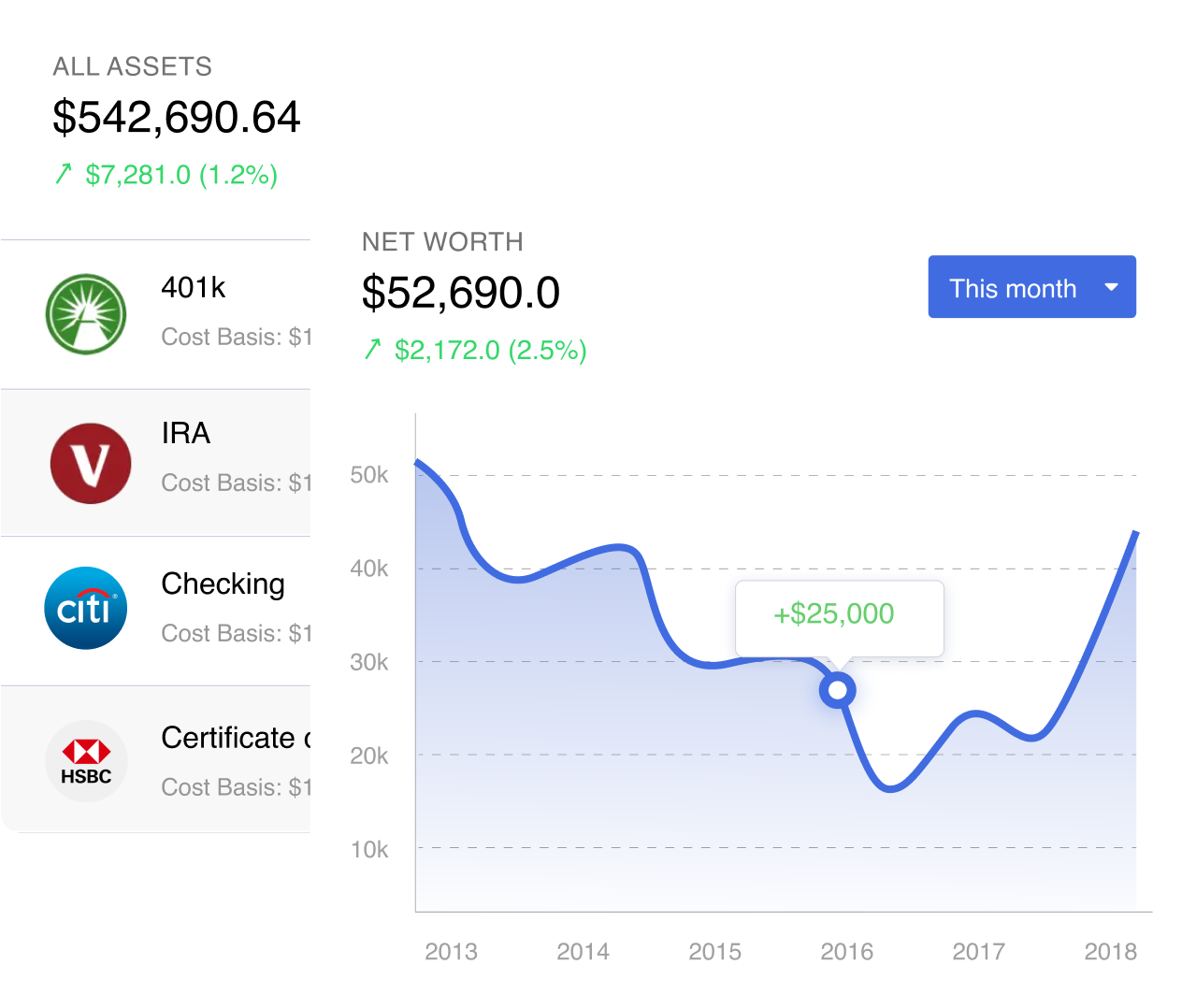
- ✅ Track your net worth annually — use Plootus to connect and monitor all accounts
Frequently Asked Questions
- Fidelity Investments — 2026 Retirement Savings Guidelines and Benchmarks
- Vanguard — How America Saves 2025
- IRS — 2026 Retirement Plan Contribution Limits (Rev. Proc. 2025-46)
- Federal Reserve — Survey of Consumer Finances 2022
- Plootus Research Team — April 2026
More ways to cut costs and grow your wealth!
Plootus collaborates with select platforms to help you compare, save, and manage your money more efficiently.

Disclaimer: Plootus (an SEC-registered investment advisor) may receive compensation for referrals to third-party products and services, listed on our Partners page. These referrals are for informational purposes only and do not constitute an endorsement or recommendation. Plootus has not conducted due diligence on, nor assumes responsibility for, any third-party offerings. Users are encouraged to evaluate these options independently before making any decisions.